What kind of flavor is dry? You’ve heard before that a wine is dry, sweet, or somewhere in between. Since it’s not the physical state of the wine, if you’ve ever spilled wine on your pants you know that, it has to be the flavor and whatever the flavor is it isn’t sweet. Sweet is easy, chocolate is sweet, soda is sweet, port is sweet. Dry is also easy, it’s the lack of sugar that would make a wine sweet and not, as I thought when I first heard the term, the taste of a towel.
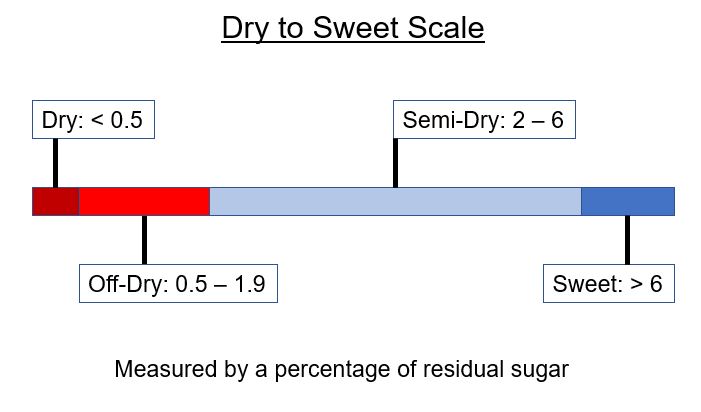
The technical definition is a wine that has no more natural sugars left to convert to alcohol, which is usually 0.5 percent or less per bottle. What can get tricky is when you have other flavors that can mask the sugar content, such as a fruit forward wine or an oak aged wine rich in vanilla or caramel. Discerning the difference can take some trial and error, just remember you’re looking for a candy sort of sweetness, not spice or fruit.
In the end if you keep the definition of dry as ‘a wine that has almost no residual sugar’ and sweet as ‘a wine that has residual sugar’ you’re good. Just that simple…
…Or is it?
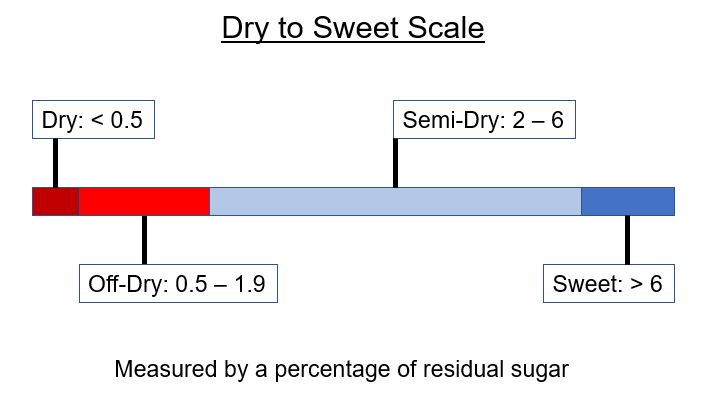
The above chart shows us three things. First, most people tend to generalize. Second, wine has a way of turning something into simple into something complicated, especially when Wine Nerds get involved. Finally, you can always find your right amount of sweetness.
So why is dry and sweet important? The primary reason is personal preference, for instance I prefer my wines dark and dry, like my humor. Second is pairing, sweet is generally associated with dessert and dry with dinner but it can go much deeper than that with sweet wines pairing well with spicy foods and fruit forward dry wines going wonderfully with chocolate. Lastly the choice can be seasonal, as I mentioned above my humor usually dictates my wine but I do find a crisp and cool riesling makes a better summer porch wine than a heavy and dry cabernet sauvignon.
Three important notes:
- Dryness is not that feeling which makes your mouth feel dry, that would be tannins, although tanninic wines are almost always dry.
- While red wines are often dryer than white wines this isn’t always the case.
- This scale doesn’t apply to sparkling wine, which is measured on the Brut to Sec scale.
If you have any questions or suggestions for posts you’d like to see post them in the comments down below! Salut!
 The Cellar Master